

By Sonali Joshi, Lead Vedic Astrologer & Healing Guide at AstroJyotiHealing.com Helping you find success, happiness, and inner peace through Jyotish, Vastu, and compassionate remedies
Do you ever feel like certain challenges — repeated relationship patterns, sudden career uncertainties, emotional overthinking, or a restless home environment — keep showing up no matter how hard you try to change them?
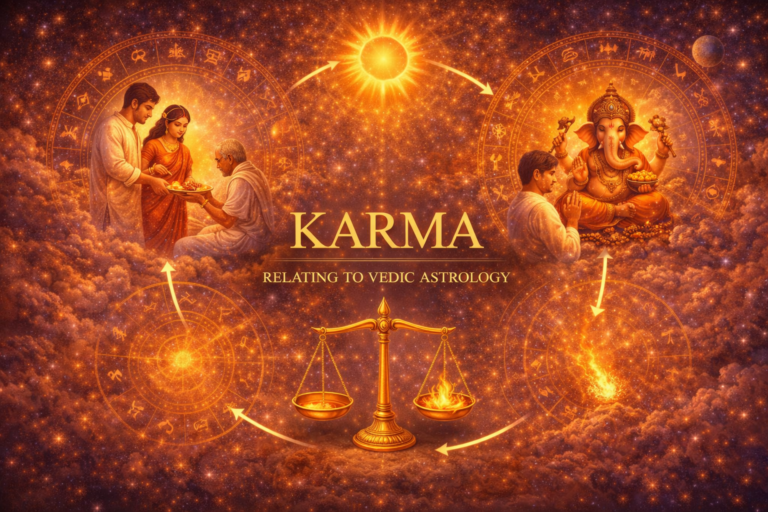
In Vedic Astrology (Jyotish), these are not random misfortunes or “bad luck.” They are expressions of karma — the universal law of cause and effect that shapes your life experiences across lifetimes.
At AstroJyotiHealing.com, we view karma not as punishment or rigid fate, but as a compassionate blueprint for soul growth. Understanding your karma helps dissolve overthinking, reduce uncertainty, heal emotional wounds, and create more harmony in your home and daily life. This guide explains karma in simple, practical terms so you can begin applying Vedic wisdom right away.
What Does “Karma” Really Mean in Vedic Astrology?
The Sanskrit word Karma comes from the root “Kri,” which means “to do” or “to act.” At its core, karma is action — every thought, word, intention, and deed you perform creates an energy that eventually returns to you.
It is not a divine judge handing out rewards or punishments. Instead, it is the soul’s own accounting system. Your current life circumstances reflect the ripening of past actions, while your present choices shape future experiences.
Jyotish acts as a cosmic mirror: your birth chart reveals how karma is playing out now, particularly through the Rahu-Ketu axis (the karmic nodes), the Moon (your emotional mind), Saturn (lessons of discipline), and specific house placements.
Key truth for beginners: Karma is not fatalistic. While some portions are destined (Prarabdha), you always have the power of conscious action, awareness, and Vedic remedies to lighten its load and accelerate healing.
The Four Main Types of Karma in Vedic Philosophy
Vedic texts describe karma in layers. Jyotish primarily works with how these manifest in your chart and life:
- Sanchita Karma (Accumulated or Storehouse Karma) This is the vast reservoir of all actions — good, bad, and neutral — from countless past lifetimes. It sits in your subtle (causal) body like seeds waiting to sprout. Most of it remains dormant; only a portion ripens in any given life. In the chart: Seen broadly through overall yogas (planetary combinations) and the strength of the 1st, 5th, and 9th houses.
- Prarabdha Karma (Fructifying or Destined Karma) The portion of Sanchita that has “begun to bear fruit” in this lifetime. This is what you experience as your current body, personality, challenges, talents, and major life events. In the chart: Most clearly visible in the natal horoscope (D-1 chart), especially the rising sign (Lagna), Moon sign, Rahu-Ketu placements, and the operating planetary Dasha periods. Example: Ketu in the 1st house often indicates a Prarabdha of spiritual detachment and self-inquiry carried from past lives, leading to an awakening-oriented personality.
- Kriyamana (or Vartamana) Karma (Current / Actionable Karma) The karma you are creating right now through your thoughts, choices, and daily actions. This is where your free will shines brightest. In the chart: Influenced by current planetary transits (Gochar) and your conscious responses to situations.
- Agami Karma (Future or Approaching Karma) The new karma generated in this life that will influence future births. Positive actions today can reduce future difficulties.
Healing perspective: Prarabdha cannot be fully erased, but it can be softened, accepted, and transformed through wisdom and remedies. Kriyamana gives you the power to rewrite your story.
How Karma Appears in Your Vedic Birth Chart
Your horoscope is a karmic map. Here are the most important indicators we focus on at AstroJyotiHealing:
- Rahu and Ketu – The Karmic Axis These shadow planets (North and South Nodes) are the strongest markers of past-life karma. Rahu represents unfulfilled desires and worldly lessons from previous births; Ketu shows areas of detachment, spiritual gifts, and what you have already mastered. Their house axis reveals your core karmic polarity.
- Ketu in 1st House: Past-life detachment influences self-identity, often bringing a spiritual warrior energy and lessons in healthy boundaries.
- Rahu in 4th House: Karmic craving for emotional security and home stability, paired with Ketu in 10th teaching balance between inner peace and outer achievement.
- Ketu in 8th House: The mystic healer’s path — transformation through endings, occult interests, and deep karmic release.
- Ketu in 9th House: Old soul wisdom, intuitive spirituality, and detachment from rigid belief systems.
- The Moon and Mind Overthinking or emotional uncertainty often stems from afflicted Moon or Mercury influenced by Rahu. Many clients discover their anxiety has karmic roots — past-life patterns of mental restlessness that can be healed.
- Saturn (Shani) Represents delayed but maturing karma and life lessons in responsibility and endurance.
- Nakshatras Your birth star (Janma Nakshatra), especially Ketu-ruled ones like Magha, adds layers of ancestral and soul-level karmic themes.
- House Connections The 4th house (home, inner peace) and 10th house (career, status) frequently highlight karmic lessons around security vs. achievement — exactly why we emphasize Rashi-specific house directions and Vastu remedies.
Karma, Uncertainty, and Overthinking – A Modern Healing View
Uncertainty is often energetic, not just psychological. When Rahu disturbs the Moon or Mercury, the mind loops in “what if” scenarios rooted in past-life unresolved desires.
Karma here is not blame — it is an invitation to evolve. By understanding these patterns, you stop fighting yourself and start working with your chart for greater stability and peace.
Vedic Remedies to Balance and Heal Karma
Remedies (Upayas) do not erase Prarabdha but reduce its intensity, strengthen positive kriyamana, and support soul evolution. At AstroJyotiHealing, we keep them practical and accessible:
- Mantras and Chanting: Specific to your chart’s challenging planets (e.g., for Moon-related overthinking or Ketu detachment).
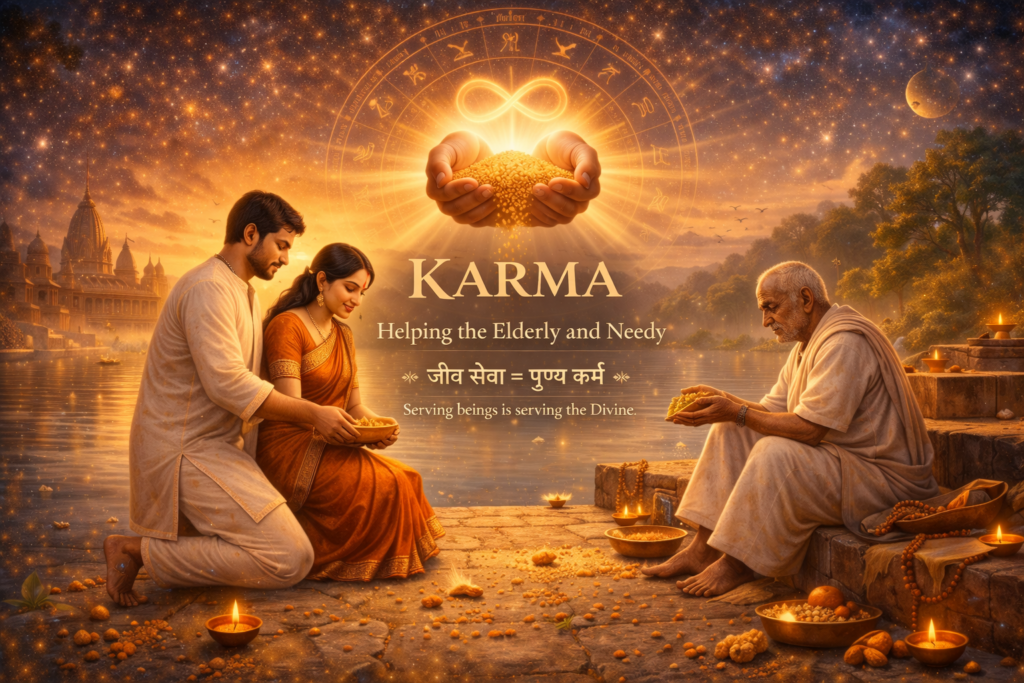
- Charity and Seva: Donating items or time ruled by the planet in question.
- Lifestyle & Vastu Adjustments: Aligning your home direction with your Rashi or Moon sign to create energetic support and reduce karmic friction (see our popular series on house directions for each Rashi).
- Gemstones & Colors (only after proper analysis).
- Grounding Practices: Yoga, meditation, ancestral honoring (especially for Magha or strong Ketu), and simple rituals for Rahu-Ketu balance.
- Conscious Action: Journaling karmic patterns, practicing detachment where Ketu teaches, and pursuing purposeful work aligned with your chart.
- Lighting a Lamp in a particular place and direction and day
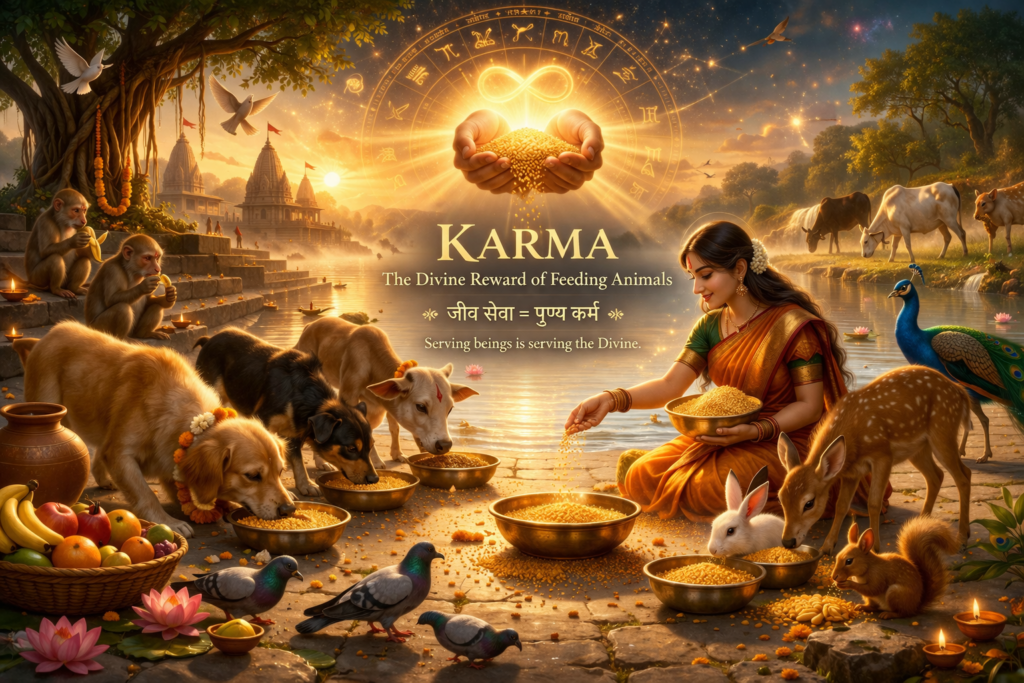
Here is a great example of Ketu in 6 th house of birth horoscope or rashi chart. The best remedy is feeding the animal , like a dog.

Important: Remedies work best when combined with self-awareness and ethical living. They are tools for empowerment, not shortcuts.
Your Beginner’s Action Plan to Work with Karma
- Get your Vedic birth chart (need date, exact time, and place of birth).
- Identify your Rahu-Ketu house axis and Moon Nakshatra.
- Read related guides on this site: Ketu in 1st House, Rahu in 4th House, Overthinking and Vedic Astrology, or your Rashi’s ideal house direction.
- Choose one small remedy and practice it consistently for 21–40 days while observing shifts.
- Journal: “What recurring pattern feels karmic? How can I respond differently today?”
You will notice reduced uncertainty and more clarity as you align with your soul’s lessons.
FAQ – Common Questions About Karma in Jyotish
Is all suffering due to bad karma? Not necessarily “bad” — karma includes learning experiences for growth. Many challenges lead to profound healing gifts.
Can astrology predict exact future events? It shows probabilities and windows of karmic ripening. Free will and remedies always play a role.
What about free will vs. destiny? Prarabdha sets the stage; Kriyamana lets you choose how to dance on it.
Do planets punish us? No. Planets reflect your karmic frequency like mirrors. Change the inner vibration, and their expression softens.
Final Thoughts: Karma as Your Greatest Teacher and Ally
Karma in Vedic Astrology is ultimately about balance, evolution, and compassion. Your chart does not condemn you — it illuminates the path so you can heal old patterns, stop overthinking, create stable homes, and live with greater purpose and joy.
At AstroJyotiHealing.com, every reading and article is designed to turn karmic awareness into practical healing and inspiration. Rahu and Ketu are not enemies; they are your fastest route to spiritual awakening when approached with understanding.
Ready to explore your own karmic blueprint? → Dive into our Rahu & Ketu House Placement Series → Read the Overthinking and Vedic Astrology Guide → Discover your Rashi’s ideal house direction for energetic harmony → Book a personalized healing consultation
Share your Rahu/Ketu placement or Moon sign in the comments — I’m happy to offer a gentle beginner insight.
With light, wisdom, and healing energy, Sonali Joshi Lead Vedic Astrologer & Healing Guide AstroJyotiHealing.com iamsonalijoshi@gmail.com
Bookmark this guide and return as you deepen your Jyotish journey. Your soul chose this lifetime for growth — and the stars are here to guide you gently home


